Mumbai's Mobility
Decoded with Data
Understanding how 27.39M+ people navigate India's busiest city every day through comprehensive transport analytics.
27.39M
Population
34 min
Avg. Travel Time
10.8M
Daily PT Riders
17.8 km/h
Avg. Speed
Where Mumbai Lives
A massive spatial mismatch exists between where Mumbaikars live and where they work, creating enormous commute pressure.
Loading map...
Spatial Mismatch Alert
High-density residential areas in the suburbs and eastern corridor are disconnected from major employment hubs, creating extreme peak-hour congestion on local trains and highways.
Density Scale
Population Density
Same absolute scale in every city (yellow → red). Darker = higher people/km².
Key Numbers
City Infrastructure
Major Employment Hubs
Source: Directory of Establishments data 2014 and Census 2011
The Daily Rhythm of Congestion
Mumbai's transport network follows predictable patterns. Understanding these rhythms is key to survival.
24-Hour Speed Pattern
Source: Google Maps API
Infrastructure Supply Analysis
Analyzing road network capacity and travel patterns across Mumbai's urban infrastructure.
Public Transport Places
Average Travel Distance
Average distance residents travel to access essential services and amenities across the city grid.
Source: Derived from OSM
Public Transport Infrastructure
Analyzing public transport capacity and ridership across Mumbai's transit network.
Bus Fleet Stats
Service Availability
99
Public buses per 1 million people
Bus Fleet by Fuel Type in Mumbai
Total Fleet
3,166
99 buses / million people
Bus Shortfall
13,734
434% of current fleet
Primary Fuel Type
Diesel
60% share (1,900 buses)
Fleet Fuel Composition
3,166
Total buses
Diesel
1,900
60% share
CNG
950
30% share
Electric
316
10% share
Source: India Urban Data Exchange
Other Public Transport Stats
Public Transport Ridership
10.76 million
Daily Ridership
50
Metro Stations
3,400
Bus Stops
13,734
Required Additional Buses
Bus shortfall indicates the estimated additional buses needed to meet service benchmarks.
Service Pressure Indicators
Source: Vahan
Mumbai vs Other Metro Cities
How does our mobility landscape compare to Addis Ababa and Delhi?
Modal Share Comparison
Mumbai Strengths
Combined bus and metro/rail share in total trips.
Estimated daily public transport ridership.
Mumbai Areas for Improvement
Current fleet: 2,700 buses
Scope for reducing peak-hour delays with better transit integration.
Cross-City Mobility Snapshot
Compare travel performance, public transport strength, and vehicle growth pressure across selected cities.
Mumbai
Addis Ababa
Delhi
Vehicle growth proxy uses registered vehicles per 1,000 people as a pressure indicator.
Source: Master Data Sheet for TAH (City Comparison metrics)
Learning from Other Cities
Mumbai Advantage
Highest PT ridership at 10.8M daily. 23% use Metro/Rail - the backbone of urban mobility.
Addis Ababa Focus
Daily PT ridership: 1.1M, bus fleet: 1,170, and average speed: 0.0 km/h.
Delhi Integration
Fleet of 5,691 buses. 10% Metro usage with expanding network.
Urban Road Network Analysis
Comparative analysis of road network accessibility and average travel distances across major Indian metropolitan cities.
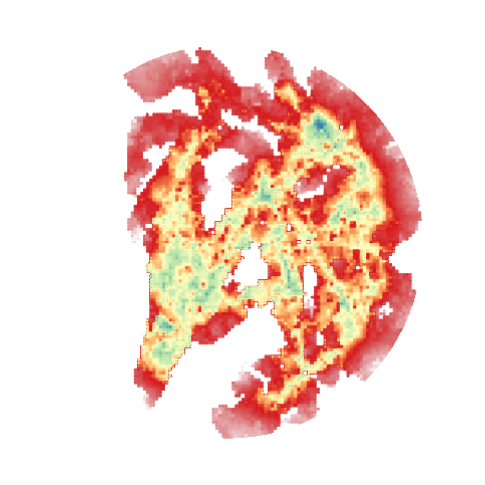
Data coming soon
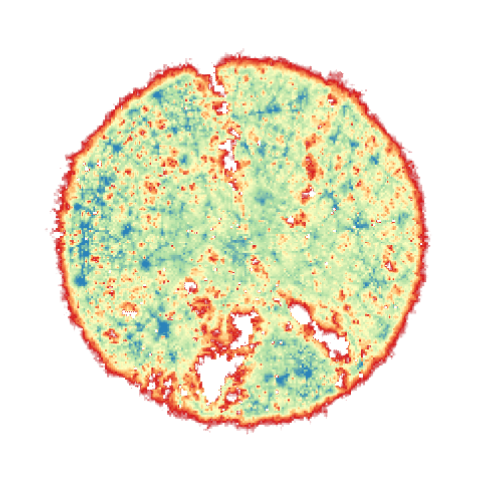
Source: Derived from OSM
Road Incidents
Understanding incident patterns to make Mumbai's roads safer.
Fatalities
Serious Injuries
2,533
Total Road Incidents
384
Fatalities
2,617
Serious Injuries
Source: Ministry of Road Transport and Highways - Road Incidents report 2022